BESTAUTO body ceramic coating starts from 500 ₾. To understand the final price for your car, agree the surfaces, preparation, coating formula and any extra areas. A starting figure cannot describe all the work on a vehicle whose paint condition has not been checked.
Body polishing is a separate service from 690 ₾ where condition calls for it. The studio also offers a separate polishing + ceramic combination from 990 ₾. Its scope is discussed for the vehicle; the combination price is not simply the sum of two separate starting prices. Interior coating from 300 ₾ and glass rain repellent from 150 ₾ cover different areas.
Below are four quote factors and the questions that help compare offers. For an overview of current prices and choosing ceramic, polishing or PPF, see ceramic coating prices in Tbilisi. This guide focuses on agreeing the work before application.
1. Paint condition and the preparation needed
Two cars of the same size can need different preparation. One may have clean paint in good condition; another may have road contamination, water spots, wash marks, holograms or repainted panels. Check these differences before selecting work rather than deciding from the car’s age alone.
Even a new car may have marks from transport or previous care. That calls for inspection, rather than automatic deep polishing. The technician assesses the defects and whether correction is appropriate and safe. Some marks may be contamination; damaged clear coat may need another solution. Ceramic does not replace missing clear coat or conceal every scratch.
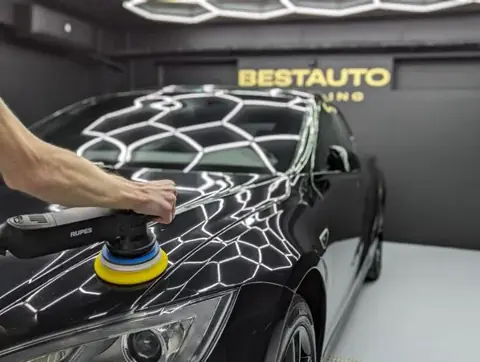
Cleaning and polishing serve different purposes. The surface must be cleaned and prepared for the selected formula. Body polishing is discussed where correction can improve the appearance. Confirm the agreed preparation, defects that will remain and how extra work affects the quote.
2. Vehicle size and the exact application areas
Surface area and access to individual parts affect the amount of work. However, a larger car does not automatically mean twice the price. A universal calculation from body type or a notional square-metre figure does not account for condition or the service included.
Start with the coverage list. Painted body panels, interior coating, glass rain repellent and any work on other parts are separate items. Agree the material and price for additional areas. “Full-body coating” does not automatically include glass, leather, wheels and every decorative component.
Identify matte surfaces, repainted panels and any existing PPF before quoting. Each requires suitable preparation and a compatible product. Photos of the car and relevant areas help start the discussion, while inspection determines the final scope.
3. The named product and its application requirements
A brand name is useful, but it does not replace the product name and instructions. BESTAUTO works with Gyeon; preparation, application and care requirements are checked for the chosen formula. Products within a brand can serve different surfaces and have different conditions of use.
Ask for the formula, areas and agreed result. Lifespan and layer counts are discussed according to the selected product and procedure. An additional layer does not become compulsory simply because of the car’s age or a “premium” label.
The current body-coating offer has an effect of up to 3 years with proper care. This is not an identical guaranteed lifespan for every car or the lifespan of interior and glass coatings. Warranty terms, if part of the selected offer, are discussed separately. The Gyeon MOHS EVO instructions illustrate why requirements belong to a named product; they do not establish that this product is included in every order.
4. Additional work and combining ceramic with PPF
Glass rain repellent from 150 ₾ and interior ceramic coating from 300 ₾ are separate services. For interior surfaces, discuss the material, compatibility and condition. A coating does not replace cleaning or repair of damaged leather; resolve those tasks before application.
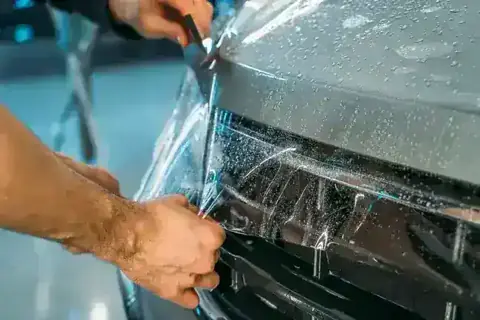
If the car has protective film, a paint ceramic coating should not automatically be applied over all the PPF. Check compatibility and agree the areas first. For physical protection against chips and road wear, consider PPF separately. Ceramic helps with gloss and care, but its price is not a wrapping budget.
Make additional work clear before the order starts. Confirm what is included, what is priced separately and what happens if cleaning reveals previously hidden features of the finish. A universal surcharge percentage cannot replace this discussion.
Agreeing preparation and the work schedule
The practical process starts with inspecting the car and discussing the goal. Do you want more gloss, easier care or correction of visible defects? Then agree the application areas, safe preparation, product, final quote and when the vehicle can be collected.
Photographs help with preliminary discussion and preparing for an inspection. They do not always reveal the clear-coat condition, every defect or previous work. A conversation based on photos is therefore not a final quote, and it does not establish a universal completion time for every car.
After application, the selected product’s conditions matter. Collection, water contact, the first wash and later chemicals are agreed for the actual procedure. Do not transfer another product’s timetable to the coating installed. Ask for specific care instructions when collecting the car.
Reading the current BESTAUTO prices
- Body ceramic coating — from 500 ₾.
- Body polishing — from 690 ₾ where required by condition.
- Separate polishing + ceramic offer — from 990 ₾ with the scope agreed.
- Interior ceramic coating — from 300 ₾.
- Glass rain repellent — from 150 ₾.
These figures are starting references for the relevant services. They do not form a compulsory bundle for every vehicle. Correction should not be added solely because coating is planned; where more preparation is needed, it must be explained and agreed before work.
Check coverage and conditions on the ceramic coating page and in the full price list. Asking what will be done for the agreed amount is more useful than comparing two figures without a scope.
Questions to ask before ordering
- Which surfaces will be treated, and with which formula?
- What preparation is included, and is separate correction needed?
- Which defects can be reduced, and which will remain?
- What is the final price for the agreed scope, and what is separate?
- When can the car be collected, and what care rules follow application?
This checklist helps compare equivalent offers and decide before work begins. A higher price alone does not prove better quality, and a lower one alone does not prove steps are omitted. Compare the actual work, material, limits and clear agreements.
For the later budget, also account for washing and the coating’s actual condition. Ceramic does not remove care costs. Universal savings over wax cannot be promised: they depend on products, use and the work the owner actually carries out.
Frequently asked questions
Why do prices differ between studios?
Offers may include different surfaces, preparation and formulas. Confirm the scope, result and additional items, then compare equivalent work. A price difference without that information cannot establish quality.
Can polishing be skipped?
It depends on the surface and your goal. Polishing is agreed when defects call for correction and it can be performed safely. Cleaning and preparation for the selected formula remain necessary; deep polishing is not automatically compulsory for every new car.
Is ceramic guaranteed to cost less than regular wax?
There is no universal saving. Compare the chosen products, preparation, real care routine and expected effect. The current BESTAUTO body-coating reference is up to 3 years with proper care, rather than an identical minimum lifespan promised to every owner.
What should I choose for a three-year-old car?
Age alone does not determine a package. Inspection, paint condition, the task and budget matter. Discuss coating alone, polishing with coating and separate areas; glass rain repellent and interior treatment are not automatically added.
Must a dark car cost more?
Some defects are more visible on dark paint, but colour does not establish a fixed surcharge or extra hours. Work depends on the actual condition and agreed result, with the final quote established after inspection.
Discussing a quote in Tbilisi
All services are available at both studios: Saburtalo and Guramishvili.
Start with the model, paint condition, existing materials and areas you want coated. An overall view and photos of visible defects help with preliminary discussion. Inspection then lets you agree the work, final price and schedule.
A clear order answers three practical questions: what needs preparation, what will be coated and how to care for the result. That turns a starting figure into an understandable offer for your car.