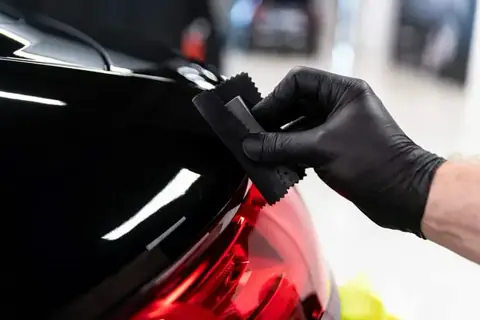
Car body polishing reduces suitable surface defects in paintwork and improves gloss. It does not replace missing clear coat or repair damaged paint. First identify the concern: contamination, fine wash marks, a deep scratch or a stone chip.
The black paint swirls and holograms guide explains how to describe marks on a dark glossy car, agree correction and check the same area under comparable light.
What polishing can improve
On a glossy finish, correction can reduce fine scratches and swirls, holograms left by previous polishing and some surface haze. The achievable result depends on defect depth and coating condition. Some defects can be corrected; others are better left reduced rather than removed completely.
A rough surface caused by bonded contamination needs cleaning first. The Meguiar’s guide distinguishes washing and decontamination from correction. Polishing a dirty car does not replace preparation.
What polishing cannot repair
- Chips with missing paint or exposed primer or metal.
- Dents, cracks, peeling paint and corrosion.
- Every deep scratch: complete removal can require excessive material removal.
A scratch that catches a fingernail merits inspection; that alone is not a diagnosis. Do not test its depth by repeatedly polishing it. Discuss repair, limited correction or leaving the defect in place.
Light, medium and deep correction
These labels describe scope and intensity rather than a universal procedure. Light correction can suit some minor defects; more intensive work can suit pronounced damage when the coating permits it. Vehicle age does not determine the required depth.
The combination of compound, pad and tool depends on the paint and defect, as reflected in the RUPES selection system. Our light versus deep polishing comparison explains the choice in more detail.
How studio work proceeds
- Discuss the aim. Mention visible defects, previous polishing, repainted panels and the finish you want.
- Prepare the surface. Wash and clean the body before assessing paint condition.
- Inspect and agree scope. Discuss areas, correction limits, cost and collection time.
- Correct. Select materials and tools, assess a test area and carry out the agreed stages.
- Check and explain care. Review the finish and remaining defects. Agree any additional protection separately.
The number of passes is not a result guarantee: coating condition and finish quality matter. The car polishing in Tbilisi service page shows available work and how to contact a studio.
Polishing, ceramic coating and PPF
| Work | Purpose |
|---|
| Polishing | Correct suitable defects in the existing finish. |
| Ceramic coating | Add a surface coating for protection and care; it does not repair chips. |
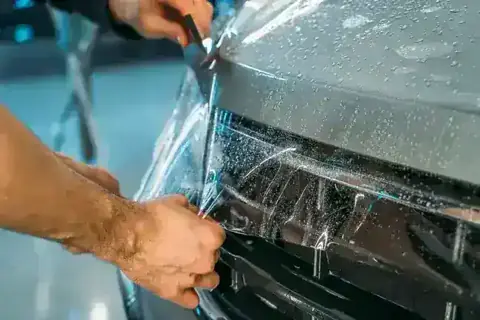
| PPF | Add a physical film layer to selected areas; it does not replace missing paint. |
Ceramic coating and PPF wrapping can complement correction. Choose protection around use and budget. Fitting a protective product does not automatically require deep polishing first.
Current BESTAUTO prices
Body polishing starts at 690 ₾. The promotional body polishing plus ceramic coating offer starts at 990 ₾. These starting prices are not separate fixed tariffs for light, medium and deep correction. Agree coating condition, scope and final cost before work.
For protection selected separately, body ceramic coating starts at 500 ₾, front-area PPF at 2500 ₾ and full clear PPF at 6900 ₾. Check package scope in the current price list. All services are available at both studios: Saburtalo and Guramishvili.
When an inspection helps
Visible swirls in sunlight, holograms after earlier work or preparing a car for sale are reasons to discuss correction. A car with good gloss and no significant defects does not need deep correction simply because of its mileage.
How long the result lasts and aftercare
A corrected defect is different from a new scratch. Poor washing can introduce fresh marks. How the car continues to look depends on use and care; one fixed lifetime cannot be promised for every vehicle.
- Do not wipe a dusty body with a dry cloth.
- Use clean washing and drying materials and products suitable for the surface.
- Follow the instructions for any added coating or film.
- Assess new defects before repeating work; deep correction is not a calendar routine.
FAQ
Will polishing remove every scratch?
No. Defect depth and coating condition limit correction; chips and missing paint need another approach.
Does a new car need polishing?
Only when its condition and the goal justify it. New cars can have defects, but purchase alone does not make polishing necessary.
Can the scope be chosen from photos?
Photos help describe the concern. Final scope and price are agreed after assessing the paintwork.
To discuss body polishing, share the model, defects and preferred studio. You do not need to choose the deepest treatment in advance.