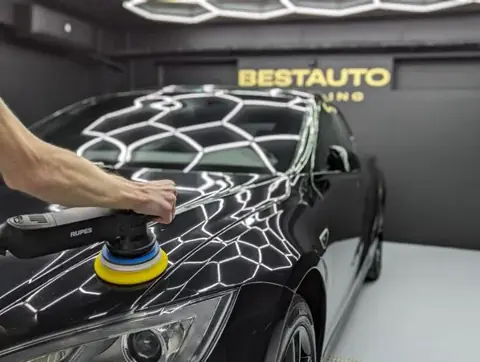
Ceramic coating genuinely makes everyday car care easier: the surface washes more easily, water beads better, dirt sticks less aggressively, and the vehicle looks more refined. But there is one important nuance: ceramic is not a “apply it and forget it forever” service. If the care routine is wrong, the effect weakens earlier. If the routine is correct, the result stays more stable and more satisfying for much longer.
This is exactly where many owners make mistakes. They assume that once the coating is installed, any car wash is fine, any shampoo is fine, and any quick gloss product can be applied on top. In reality, ceramic performs best when the maintenance routine is simple but correct. That matters even more in Georgia, where the car often faces strong sun, dust, hard-water spotting, bugs, and urban contamination.
In this guide, we cover the first days after coating application, the right washing sequence, what to avoid, when refresh maintenance makes sense, and how to think practically about ceramic alone, PPF alone, or PPF + ceramic.
If drying leaves rings or streaks, the water spots on paint and ceramic coating guide helps record the care history, assess a clean, dry surface and agree treatment for a persistent mark.
Why Ceramic Needs Proper Care
The main purpose of ceramic coating is to make everyday paint maintenance easier. It reduces dirt adhesion, improves gloss, and supports hydrophobic behavior. But ceramic does not mean the surface is now immune to everything. It does not stop rock chips the way PPF does, and it does not neutralize the effects of poor washing if the car is constantly treated with rough brushes and aggressive chemistry.
The core idea behind proper care is very simple: the less daily damage you cause to the surface, the longer the coating will keep delivering the effect you paid for. So the main goal is not “wash it as often as possible,” but “wash it safely and correctly.”
The First Days: Follow the Selected Material Instructions
At collection, ask when water contact, the first wash and normal use are allowed. These periods can differ between products. For example, GYEON Q² Mohs EVO has its own early-care requirements. Follow the selected coating’s instructions rather than a universal 48-hour rule; this example does not establish which product BESTAUTO uses.
What to Avoid Before the Permitted First Wash
- Do not wash before the time agreed for the selected coating.
- Follow the separate restrictions on water and chemical contact.
- Avoid unnecessary rubbing.
- Do not apply unknown gloss or protection products.
- Where possible, reduce exposure to difficult contamination during early care.
What You Can Do
- Begin driving according to the instructions given at collection.
- Keep the early-care and first-wash instructions available.
- If bird droppings, sap or other difficult contamination lands on the body, ask about compatible removal; do not wait an arbitrary two days or scrub with a dry towel.
- Contact the studio before experimenting if the correct action is unclear.
This is often overlooked, but it is actually where the correct long-term care routine begins.
How to Wash a Ceramic-Coated Car Properly
The most important part of care is a careful car-washing routine using suitable materials and a clear sequence. After early care, follow the coating instructions while considering surface condition and contamination. Keep accessories clean and contact gentle.
What You Will Need
- a pH-neutral car shampoo;
- a soft wash mitt or a quality wash sponge;
- clean microfiber towels for drying;
- clean buckets and proper wash technique.
This list is not random. A pH-neutral product avoids unnecessary stress on the coating, a soft mitt reduces the risk of wash marring, and good microfiber lowers the chance of water marks and friction damage.
The Correct Washing Process
A safe routine usually looks like this:
- Pre-rinse the car to remove loose dust and abrasive dirt.
- Use a suitable shampoo rather than harsh household chemicals.
- Wash with controlled, gentle contact.
- Rinse thoroughly.
- Dry the surface carefully with clean microfiber instead of rubbing it aggressively.
The main principle is always the same: less harsh friction, more controlled contact.
How Often the Car Should Be Washed
There is no universal schedule here either, but in practice it is better not to let heavy contamination build up for too long. A ceramic-coated car is easier to maintain precisely because regular safe washing is simpler. That advantage disappears if dirt, mineral spots, resin, and bird droppings stay on the body for long periods.
7 Mistakes That Most Often Weaken Ceramic Performance
1. Using Harsh Brushes
Brush-type washes and rough scrubbing gradually damage the finish visually and work against the very effect ceramic is supposed to preserve.
2. Random Aggressive Shampoo
Not every product that says “car wash” is coating-friendly. Strong chemistry used carelessly can weaken behavior and finish more quickly than necessary.
3. Constant Parking Under Trees
Tree sap, bird droppings, leaf residue, and shade-related moisture can all become a problem if the car constantly sits under trees.
4. Ignoring Bird Droppings for Too Long
Even with ceramic, bird droppings should not be left on the body for long, especially in hot weather.
5. Careless Use of Very Hot Water
Extremely hot water is not part of good routine maintenance and may create unnecessary stress, especially when combined with other poor habits.
6. Applying Incompatible Products
Not every shine product, wax substitute, or quick detailer works well over ceramic. Random layering can worsen the result instead of improving it.
7. Unnecessary Abrasive Polishing
Ceramic does not mean the surface should be polished aggressively on a whim. Abrasive polishing without real need weakens the system unnecessarily.
Refresh / Top-Layer Maintenance: When It Makes Sense
Assess contamination first: compatible cleaning may improve water behavior. A maintenance topper adds its own effect. For example, GYEON Q²M Cure also works on uncoated paint. Fresh beading after a care product does not prove that the original coating remains or restore its original lifespan.
Consider inspection if normal washing leaves marks, water behavior changes or earlier products are unknown. Agree suitable cleaning and compatibility first, then decide whether a care product or new coating is appropriate. Regular maintenance does not require a topper on a universal calendar.
Deep Cleaning: When to Discuss Clay-Bar Treatment
Roughness or weaker beading calls for assessment, not automatic claying. GYEON distinguishes mild and coarse clay; coarse clay may cause marring. Choose the method and any mechanical contact for the actual surface and coating. Abrasive correction afterward also changes the surface, so agree that sequence before work.
Ceramic Only, PPF Only, or PPF + Ceramic?
Ceramic Only
Best for owners whose main priority is:
- easier maintenance;
- better gloss;
- cleaner everyday appearance.
PPF Only
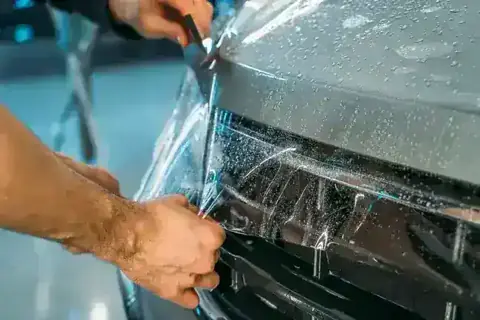
Paint protection film can be considered when reducing chip risk and mechanical exposure on vulnerable areas is the priority. Choose the material and coverage for the purpose and paint condition.
- stronger physical protection;
- reduced chips and impact damage;
- preservation of factory paint on high-risk zones.
PPF + Ceramic
Consider PPF on vulnerable areas and ceramic on other suitable surfaces. Coating the film itself requires compatibility with its top layer and finish. A combined treatment is optional; choose it for the purpose, condition and budget rather than assuming every car needs both.
- PPF protects against mechanical damage;
- ceramic helps with washing, gloss, and visual upkeep.
Frequently Asked Questions
Can I use an automatic car wash with ceramic?
A brush-type automatic wash is still not a good idea. Even if the coating is present, rough washing can still damage the finish visually.
Do I need a special shampoo?
You do not need something exotic, but you do need a safe, pH-neutral car shampoo rather than harsh or random chemistry.
How often is refresh maintenance needed?
There is no universal calendar. Check condition, contamination and washing first, then decide on cleaning, a compatible topper or other maintenance. New repellency after a care product does not establish restoration of the original ceramic coating.
Is a ceramic-coated car really easier to maintain?
Yes — provided the washing routine is correct. Ceramic helps a lot with day-to-day maintenance, but it is not magic.
If the effect weakens, do I need to redo everything from zero?
Not always. Compatible cleaning may be enough; other cases call for a care product or new application after assessment. Neither weaker beading nor improved beading after a topper measures how much original coating remains.
When It Makes Sense to Visit the Studio for an Inspection
Inspection is useful when washing leaves persistent marks or roughness, water behavior changes or product compatibility is unclear. Explain previous care and the known coating. Current BESTAUTO offers include body ceramic from 500 ₾ and a separate polishing + ceramic offer from 990 ₾. These are prices for those services; maintenance work and preparation needs are quoted after inspection.
- water behavior has clearly changed;
- the surface feels rough or contaminated;
- the coating no longer seems to perform evenly;
- you are unsure whether the issue is dirt build-up or actual coating decline;
- you want to refresh the finish before a new season.
The Main Takeaway
Ceramic coating makes maintenance easier, but only if you support it with the right care routine. Safe washing, timely removal of stubborn contamination, and avoiding common mistakes make a real difference in how long the effect lasts.
Choose for the purpose: ceramic for gloss and easier care, PPF to reduce chip risk on vulnerable areas. Check surface condition and compatibility before work. Read the ceramic durability guide; the BESTAUTO body offer is an effect of up to 3 years with proper care. All services are available at both studios: Saburtalo and Guramishvili. Photos start a preliminary discussion; the final work, quote and timing are confirmed after inspection.