When choosing ceramic coating for a car, you will often see 9H, SiO₂ and SiC in product descriptions. People use these labels to compare protection, lifespan and price, although the terms describe different characteristics. A useful choice starts with their meaning and continues with the particular product, paint preparation and care instructions.
A label gives you a question to ask. To make a decision, you also need the conditions behind a claimed result. Surface, intended use, application and everyday driving matter. An owner of dark paint may notice wash marks particularly clearly, while someone driving outside the city may be more concerned about stone chips. Those goals lead to different work.
This guide compares the labels, sets out questions before booking and explains their relationship with polishing and PPF. The current BESTAUTO starting point is body ceramic coating from 500 ₾, with an effect of up to 3 years with proper care. Material, preparation, coverage, final price and time are confirmed after inspection.
9H: understanding a pencil-hardness claim
H and B are familiar markings on pencils. In coating descriptions, 9H usually refers to a result from a pencil test. Read it together with the named method and test conditions. The word “ceramic” and a separate 9H label do not explain how a particular product was tested on automotive paint.
The official ASTM D3363 description notes the influence of pencils, substrate and comparison conditions. If hardness is important to your choice, ask for the particular coating's test information.
The Mohs scale is a separate scale used for minerals. A 9H label cannot automatically be converted into the hardness of quartz, silicon carbide or diamond. A thin coating on clearcoat works with its underlying surface; an ingredient name does not turn a car panel into a solid piece of that substance. For an owner, the useful question is what result to expect on the actual vehicle.
- Check which product and surface were tested.
- Ask about the method, preparation and available result.
- Consider hardness alongside the coating's intended use and care.
- Discuss film coverage separately when stone chips are the concern.
A pencil rating does not make rubbing the paint with sand, keys or a hard brush a suitable care method. A protected car still needs gentle washing and removal of loose contamination before contact. One number does not explain resistance to every type of contact or establish a lifespan on your car.
SiO₂: information about a formulation and product
SiO₂ is the formula for silicon dioxide. In an automotive coating description, it provides information about composition or technology. A commercial coating is a developed formulation, and its application and resulting properties should be checked in the product documentation. One chemical formula cannot assign the same film thickness, water contact angle and lifespan to every product.
Manufacturers may describe different coatings using similar terms. Compare the full product name, generation, intended surfaces and recommendations. A formulation change within one line matters too: data for an older version should not automatically be applied to a newer one. Before work on your car, obtain a clear description of the material being proposed.
- Which surface is the product designed for: paint, film, glass or interior?
- What preparation does it need, and is paint correction required?
- What are the application and initial-care conditions?
- How does the manufacturer describe maintenance, lifespan and warranty?
For everyday use, discuss gloss, water behaviour and ease of cleaning. Relate those qualities to your own care routine: where the car is parked, how it is washed and what contamination it encounters. Selecting a coating from the name of its chemical basis alone leaves those practical questions unanswered.
SiC: interpreting a material name on a coating
SiC is the formula for silicon carbide. When it appears in a coating description, check what the manufacturer says about the particular formulation and its intended use. A bulk substance, an ingredient and a finished automotive layer are different things to assess. That distinction matters when a description promises scratch resistance or a very long life.
A table that simply assigns “standard” to SiO₂ and “premium” to SiC provides too little information for a booking. Price depends on the actual product, preparation, coverage and work. Coatings can also have different surface restrictions and care requirements. Compare particular offers rather than assigning one formula a universal advantage over every other product.
- Avoid deriving coating lifespan from the hardness of a starting substance.
- Check the selected product's intended use, limits and instructions.
- Compare offers with equivalent coverage and preparation.
- Discuss material warranty and service terms separately.
Layer count also follows the application system. Different coatings should not be combined just because their labels sound promising. If a system uses several materials, obtain clear instructions for compatibility, work order, curing and maintenance. The proposed combination should have a practical purpose on the chosen surface.
Comparison table: reading the three labels
The table helps you read a product description and prepare questions for the installer. Choosing a price and expected lifespan then requires a specific proposal for the car. A test result, formulation and application system provide different parts of that information.
| Label | What it describes | What to check | What it cannot establish alone |
|---|
| 9H | A claimed pencil-hardness rating | The method and tested surface | An absence of all scratches or chips |
|---|
| SiO₂ | Information about composition or technology | The full product name and instructions | A shared lifespan for every formulation |
|---|
| SiC | A substance named in a formulation description | The particular coating's properties and use | Bulk-material hardness across the whole car |
|---|
| Several layers | A proposed application system | Compatibility and work order | A fixed addition to lifespan |
|---|
Similar labels can appear on different products, and one line can change between generations. Keep the installed product name and handover instructions. They will help when arranging care or discussing persistent marks on the surface, especially if a different workshop later inspects the car.
Comparing offers for the way you use the car
Start with your goal and the appearance you want to achieve. For gloss and easier care, discuss ceramic and the condition of the clearcoat. For stone chips, choose areas of physical protection. When combining services, agree materials and work order in advance. This lets you compare proposals aimed at the same result.
- Ownership horizon. Choose a useful planning period; assess maintenance and repeat work by condition.
- Parking and routes. Explain parking under trees, dusty roads and trips outside the city.
- Washing. Discuss the care you can provide and the restrictions immediately after application.
- Paint appearance. Show the defects you want addressed and agree an achievable correction result.
Colour helps explain which marks concern the owner, but it does not automatically require the most expensive formulation. A garage also cannot guarantee that any product will reach its full stated lifespan. Compare preparation, properties and care for the actual car instead of choosing a material only from its colour or value.
GYEON describes PURE EVO as a SiO₂ coating and MOHS EVO through modified polysilazane technology. These examples show why product names and documentation matter. Confirm the particular material's availability at the studio before booking.
BESTAUTO prices and preparation
Current starting prices apply to different surfaces. Body ceramic coating starts from 500 ₾; interior treatment starts from 300 ₾, and anti-rain treatment for glass from 150 ₾. The up-to-3-year effect with proper care refers to the body coating offer. Individual products, surfaces and warranty terms are discussed separately.
- Inspect surface condition and compatibility before work.
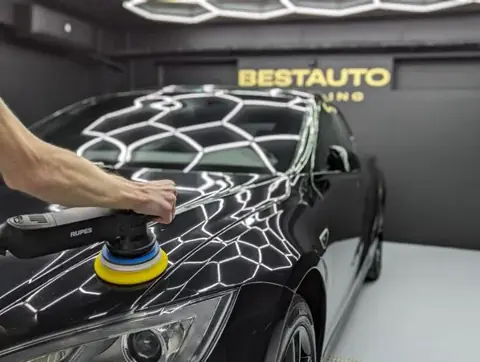
- If the paint needs correction, agree suitable body polishing.
- Confirm material, preparation, final amount and time before booking.
Polishing is not automatically required on every new car. A separate coating starting price also does not define the contents of every possible package. The polishing service page includes “polishing + ceramic” from 990 ₾; applicability and work scope follow inspection. When comparing quotes, check which preparation is included so you do not count the same work twice.
Current positions are on the ceramic coating service page. For a budget over several years, read the guide to body-protection costs. It separates initial work, washing and later maintenance, allowing you to discuss more than the first application price.
When to discuss PPF alongside ceramic
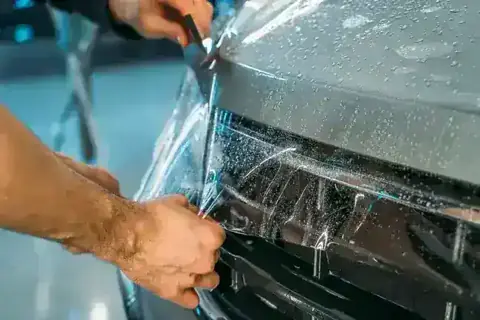
For stone-chip risks, consider PPF protective film. It creates a physical barrier and can reduce damage from some contacts. Film still cannot guarantee an absence of every possible defect; coverage, material, installation and impact matter. Ceramic and film offer different protection and care benefits.
Choose areas for the car's real routes and parking. Individual zones suit some owners, while others value a full wrap. Tell the installer about an existing coating before PPF work: preparation and order depend on the materials. Coating over film requires consideration of its topcoat, finish and both manufacturers' conditions.
The sequence is explained in the ceramic over PPF guide. For combined services, request itemised work and care instructions for each surface. That makes the film coverage, coated areas and later maintenance clear when the vehicle is handed over.
Frequently asked questions
Does 9H mean the paint cannot be scratched?
The label does not promise freedom from scratches after every kind of contact. Check how the particular product was tested and follow its wash recommendations. Stone chips and other physical risks require a separate discussion of PPF and coverage.
Is SiC always better than SiO₂?
Compare the particular formulations, their intended use and their conditions on your surface. One composition label cannot determine a shared lifespan, price and result. Preparation, application quality and the care available to the car are part of the decision.
Can two different coatings be layered?
The particular materials' instructions must allow the combination. Agree compatibility, sequence, curing and maintenance before work. Adding layers without that check does not establish a predictable increase in lifespan or resistance.
How do I check a GYEON or another brand's formulation?
Start with the full name and generation, then consult the official description and instructions. Seller terminology and a brand name do not accurately classify an entire range. Confirm the proposed material and its availability before application.
What does ceramic coating cost in Tbilisi?
BESTAUTO body coating starts from 500 ₾. The final amount depends on the selected work, surface and preparation, and is confirmed after inspection. Compare the proposal's contents and care requirements as well as its product labels.
Conclusion: choose a product, preparation and clear care
A useful ceramic choice connects technical information with everyday vehicle use. Keep the product name, agree preparation and obtain instructions after application. If stone chips are a priority, discuss film and zones separately. That conversation provides a clearer basis for work than one marking on a package.
- 9H, SiO₂ and SiC describe different characteristics.
- Assess lifespan and result for the particular product and surface.
- Layer count and combinations follow the application system.
- BESTAUTO body ceramic starts from 500 ₾, with an effect up to 3 years with proper care.
- Material, preparation, price and time follow inspection.
Describe the car, preferred appearance, parking and washing routine. Photos can begin a preliminary discussion; an inspection establishes the full work scope. All services are available at both studios: Saburtalo and Guramishvili.