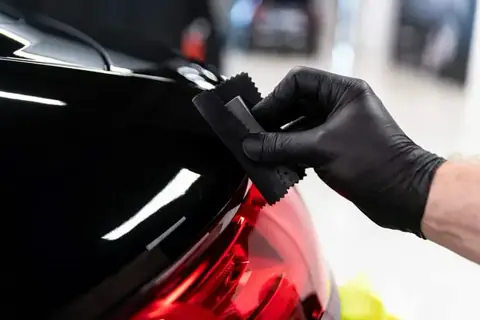
There is no universal annual or two-year interval. Two cars of the same age can have different defects and treatment histories. Car polishing is for justified correction, not mandatory prevention at every seasonal service.
Clean first, then assess the defects
Dullness or a spot does not automatically mean polishing is needed. Wash the body, remove contamination appropriately and assess remaining marks. Mineral residue, tar or sap may require cleaning; polishing cannot restore chips or missing paint.
Swirls, holograms and suitable surface scratches are reasons to discuss correction. Choose intensity after assessment; not every defect can be completely removed safely. The scratch guide helps distinguish these situations.
What affects repeat polishing?
- Washing: dirty accessories and rubbing dry dust may add fine scratches. Wash frequency alone does not establish correction frequency.
- Usage: dust, trees, highway driving and outdoor storage affect care. In Tbilisi, consider sun-heated panels and prompt removal of stubborn contamination.
- Paint history: previous correction, repainting and clear-coat condition matter more than age or imported status alone.
- Your goal: discuss appearance, paint limitations and a reasonable scope together. Removing extra material just to erase every mark is not always justified.
Defects are often more visible on dark paint, but that does not prove it deteriorates faster or needs more frequent aggressive polishing. Assess a new car's actual condition too.
How ceramic coating and PPF affect the decision
Ceramic coating may make maintenance easier, but it does not guarantee an interval until the next correction. Abrasive polishing may affect existing protection; first agree on whether correction is needed and how protection would be restored afterward.
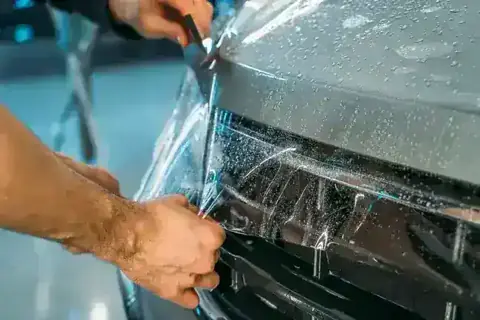
Paint protection film covers selected painted panels, but the film and underlying paint are different surfaces. Do not automatically use the same polishing method on film as on paint. Treatment, restoration or replacement of damaged film requires a separate assessment and its material instructions.
| Situation | Next step |
|---|
| Contamination or residue | Appropriate cleaning and reassessment |
| Surface paint defects | Discuss a sufficient correction scope |
| Marks on coating or film | Identify the material and compatible method |
| A chip or deep damage | Assess repair; polishing cannot replace paint |
How to reduce repeat correction
Address the causes of new marks: avoid wiping a dirty body dry, use clean accessories and suitable products, and remove bird droppings, insects and sap promptly. Do not work on hot panels or allow products to dry against their instructions. Detailing washes and careful subsequent maintenance matter with every form of protection.
Inspect after a demanding trip or new damage, but do not automatically schedule deep polishing before every season. A reasonable result may mean reducing a defect while retaining some trace to preserve the paint.
Prices and a work plan
BESTAUTO body polishing starts at 690 ₾; the promotional combination with ceramic coating starts at 990 ₾. PPF for basic front-end zones starts at 2500 ₾, and full clear PPF at 6900 ₾. These are different jobs, not polishing-frequency tariffs. Their starting prices cannot establish guaranteed payback or justify protection for every car. Agree on scope and the final quote after assessment; see the current price list.
Frequently asked questions
Should a car be polished every year?
No. Healthy paint may not need annual abrasive correction simply because the calendar says so.
Is there a safe number of repeat polishes?
There is no universal number. Consider paint condition, previous work, the defect and the chosen method.
Does ceramic coating eliminate repeat polishing?
No, but neither does it make polishing mandatory. Assess the surface first; correction may require restoring protection afterward.
Is film polished the same way as paint?
Not automatically. Check compatibility and film condition separately; protection does not make it invulnerable.
Does dark paint or a new car need a different schedule?
Age and color alone do not set a schedule. Marks show more clearly on dark paint; new cars may have transport damage. Decide after inspection.
All services are available at both studios: Saburtalo and Guramishvili. Discuss paint condition with a convenient studio: describe the marks, previous polishing, repainting and protection. Photos help with the initial discussion but do not replace assessment.