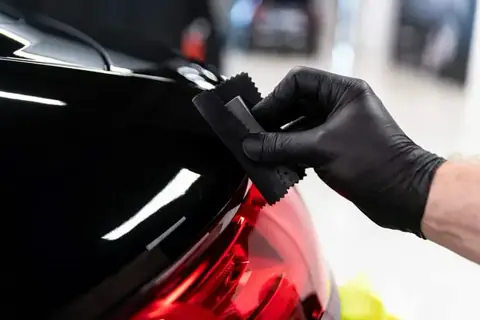
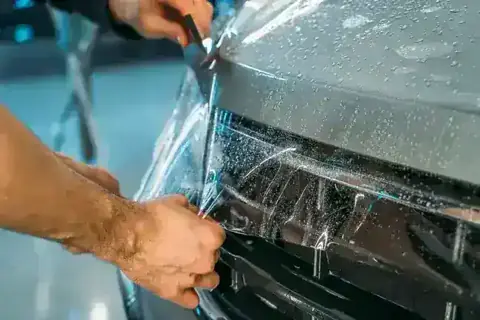
A retail bottle may contain wax, abrasive polish or a formula combining cleaning, correction and protection. Comparing every cream with studio polishing is therefore misleading. Establish what the particular product does and what you want: added protection, a temporary appearance improvement or reduced paint defects.
What does the word polish mean?
| Product type | Main purpose |
|---|
| Wax or protective product | Protection and appearance; some products may mask fine marks |
| Abrasive polish or compound | Correction of suitable surface defects by removing some coating material |
| Combined product | Several tasks in one formula; check its correction and protection functions in the instructions |
The words cream or shine and the packaging do not establish abrasiveness. For example, Meguiar’s Ultimate Polish is intended to reduce fine swirls and allows hand or machine application. Read the specific formula’s description, beyond the label name.
Read the instructions before application
- Surface: is it suitable for glossy paint, matte paint, film or plastic?
- Action: cleaning, masking, abrasive correction, protection or a combination?
- Method: is hand application allowed, and what machine and accessories are specified?
- Preparation: how should the surface be cleaned, at what temperature, and how are residues removed?
- Compatibility: is it permitted over existing ceramic or PPF, and before future protection?
Do not transfer drying times, pass counts or durability claims from one bottle to another. If its purpose is unclear, avoid experimenting across a whole panel. A small check in a permitted area according to the instructions does not remove the surface requirements.
When home care may be enough
If washed paint is in good condition and you want to maintain its appearance or renew compatible protection, a suitable product can make sense. Vehicle age alone does not prescribe deep correction. Begin with proper cleaning: do not rub grit with compound or cover contamination with wax.
Temporary masking and defect correction are different outcomes. Assess the effect after the specified residue removal and consider the product's properties. There is no universal two-week result for a bottle or one-year result for a studio; the finish afterwards depends on the treatment, use and maintenance.
When to discuss studio polishing
Studio body polishing starts with the defects, coating history and desired result. It may reduce suitable scratches, holograms and haze. Chips, missing paint and deep damage are not automatically removed by either compound or a studio. The scratch guide helps prepare questions.
Method selection, coating condition and result control matter. Depending on its type, a thickness gauge measures total coating thickness or individual layers; any reading cannot automatically be treated as the exact remaining clearcoat. No single threshold mandates repainting for all cars, and material removal is not identical in every procedure.
Scope, stages and timing are agreed for the car. BESTAUTO body polishing starts at 690 ₾; the promotional combination with ceramic coating starts at 990 ₾. A package is not compulsory for every customer; compare the current price list with the objective.
Can you achieve a result yourself with a machine?
Yes, with suitable materials, skills and conditions for the task. A dual-action machine is not inherently a weak substitute for a rotary: both technologies serve different jobs. Results depend on the system and technique, not just the tool's price.
Mistakes can leave marks, overheat an area or remove too much material. Edges, previously corrected and repainted panels need particular care. Do not chase every deep scratch at any cost. If paint condition is unknown or you cannot control the result, discuss the work with a technician; correcting damage has no universal small surcharge.
Ceramic coating, film and matte surfaces
Do not automatically apply an ordinary gloss product to matte paint or matte film. Use care approved for that material: abrasive correction may change its texture. Polishing can also affect existing ceramic protection, so compatibility and subsequent protection need separate agreement.
Before ceramic coating or PPF, appropriate preparation is required, but deep polishing is not mandatory for every car. When combining film and coating, agree preparation and film installation first, then a compatible coating for the selected surfaces. Ceramic followed by any film is not a universal sequence.
Frequently asked questions
Is every retail polish a wax?
No. Protective, abrasive and combined formulas exist. Check the specific product's purpose and instructions.
Can hand polishing reduce scratches?
Some abrasive products allow hand application and treatment of fine marks. Results depend on the product, defect and surface; complete removal of deep damage cannot be promised.
Can polish be used over ceramic coating?
Only after checking compatibility and the objective. Abrasive treatment may affect the coating; a protective product over it must also follow the materials' recommendations.
How often should studio polishing be done?
According to condition, rather than automatically each year. Previous work and current defects matter more than the car's age. Read the polishing frequency guide.
Is a studio needed before every wrap or ceramic coating?
Assessment and appropriate preparation are needed. Correction scope follows the paint and objective rather than an identical prescription for every car.
All services are available at both studios: Saburtalo and Guramishvili. Discuss the appropriate scope of treatment: describe defects and name the products already used. Photos help start the conversation; the work and final quote follow assessment.