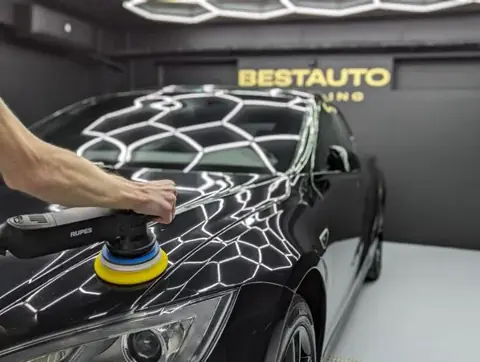
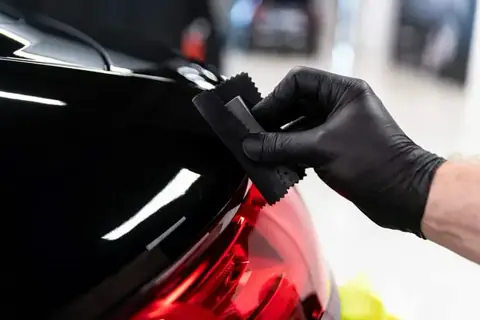
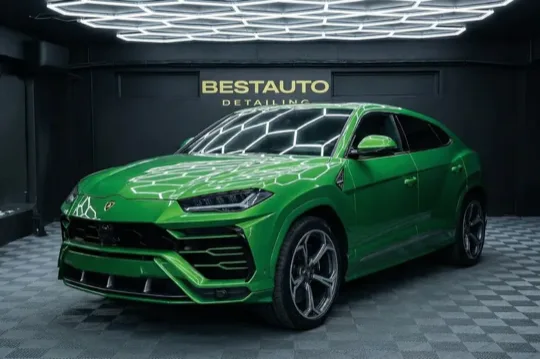
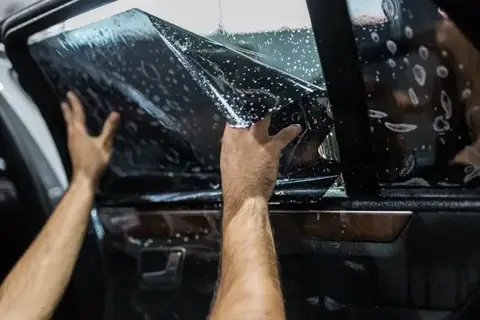
PPF (Paint Protection Film) is a protective film installed on painted vehicle panels. The polyurethane material adds a barrier between the paint and road exposure, helping reduce damage from small stones and light surface contact. Protection has limits: a strong impact, deep cut or damage to the film can also affect the finish underneath.
Clear PPF preserves the original body colour. Clear matte film changes the surface sheen, while colour PPF combines film protection with a colour change. None of these options repairs paint that is already damaged.
For glass roofs, see the panoramic roof protection film guide: Quantum Antiskol, exterior installation, glass condition and a starting price of 900 ₾.
How paint protection film is built
Film has a base, an adhesive layer and an outer surface with the properties of its particular series. The base is usually thermoplastic polyurethane, or TPU. The adhesive holds it on the prepared finish; the top surface affects appearance, care and the ability to self-heal light marks.
The release liner protects the adhesive before fitting and is removed during installation. It does not stay on the vehicle as an extra protective layer. Compare thickness and properties using the documentation for the specific series: the name PPF alone does not describe an identical construction for every film.
What PPF can protect against
Owners choose film to reduce the risk of chips and light surface damage. The film itself can be marked or torn and may need inspection and replacement of an affected section. An installer cannot promise in advance that paint will remain untouched after a serious impact.
Self-healing concerns light marks in the top coat of a suitable film. Its speed and conditions depend on the material. Deep cuts, punctures, tears and paint damage do not disappear this way. Check the instructions for your installed film before trying to heat a mark; do not test it with boiling water or intense DIY heating. Read more about how PPF self-healing works.
Film still needs care. Remove bird residue, insects and other contaminants using a suitable method; consider cleaning-product compatibility and water pressure near edges when washing. Our separate guide covers product choice and care for PPF.
PPF, vinyl and ceramic coating compared
| Material | Main purpose and limitation |
|---|
| Clear PPF | Additional protection for painted panels while retaining their colour; choose a gloss or matte finish separately. |
| Colour PPF | Film protection and a new colour in one material; use the separate colour-change service. |
| Vinyl wrap | A colour or design change. Decorative vinyl should not automatically be treated as equivalent to protective PPF. |
| Ceramic coating | Surface properties and easier care. It does not replace film when protection from stones is the goal. |
Water repellency and resistance to contamination depend on the particular product. A general material name is insufficient to rank every PPF below every ceramic coating. If coating is planned over film, check compatibility separately. The detailed PPF, ceramic and vinyl comparison helps match a material to your goal.
Partial protection or a full wrap
Coverage depends on driving, parking, paint condition and budget. Regular highway use can be a reason to discuss front-panel protection first; a full wrap covers a wider area. Agree the precise panel list rather than assuming that “full” includes glass, interior trim and every additional job.
Vehicle age or class alone does not decide the choice. Film does not guarantee a financial return at resale, and not every owner needs the largest package. For a repainted vehicle, first assess the condition of the finish and its readiness for installation. See what to agree before a full PPF wrap.
PPF price and warranty at BESTAUTO
A full clear wrap starts from 6900 ₾; the full Lux package starts from 8600 ₾, a 1700 ₾ addition to the base package. Lux is a package name, distinct from the film brand LuxArmor. Agree the material, coverage and any required preparation for the particular vehicle. Current options are on our PPF service page.
The current studio offer lists LuxArmor PRO, Quantum Rocket Pro and LLumar Platinum. The film has a 10-year warranty under the manufacturer's terms; exclusions and installation obligations are agreed separately. A material warranty does not mean ten years of protection against every impact or a warranty on all work. Contact your BESTAUTO studio for film and installation questions. The service is available in Saburtalo and Guramishvili.
For comparison, LLumar's PPF series documentation describes finishes, properties and warranty limits separately. Specifications for one series are not a universal rule for every film.
Frequently asked questions
What does PPF stand for?
Paint Protection Film: film used to protect the paint finish. This article concerns body panels, rather than window tint or windshield protection film.
Is clear PPF invisible on a car?
It preserves the original colour, but edges, installation details and the chosen finish can be visible. Discuss a material sample and edge treatment before work begins.
Do all PPF scratches disappear by themselves?
No. Self-healing can reduce light marks in the top coat of a suitable series. Cuts, tears and paint damage need inspection.
Must a car always be polished before PPF?
Preparation is necessary, but polishing is not mandatory for every vehicle. The need and scope are determined after assessing the finish; film does not remove deep defects beneath it.