Returning a car after a lease or long-term rental is a technical procedure ruled by cold arithmetic: every hour of prep or every lari paid is compared to the fee the lessor will charge for a found defect. Sometimes detailing fully pays back (a 400 ₾ interior cleaning offsets an 800 ₾ "improper condition" fee), sometimes it does not (a 600 ₾ deep chip repair is more than the 250 ₾ fee). Below — what the acceptance check covers at major Georgian leasing and long-rental operators (Avis, Sixt, Topcars, leasing arms of Georgian banks), which detailing items pay back and which to skip, and how to set a sane prep plan a week before handover.
What the lessor checks — typical acceptance check
The acceptance check after a lease or long-term rental in Georgia is a formal procedure with a checklist that the lessor's representative walks through inside and out. The exact list depends on the company and the contract, but the base set is identical.
Outside the body. Chips and scratches deeper than primer (with metal exposure or rust), dents bigger than a coin, colour mismatch between panels (a respray sign), glass cracks and chips, headlight condition (cloudy, broken), bumper and mirror integrity. Each finding gets a photo and a note in the acceptance act.
Wheels and tyres. Tread depth (most lessors set 4 mm minimum), sidewall damage, rim integrity (no kerb rash or scratches over 1 cm on the face), wheel covers in place, spare tyre condition.
Interior. Seat condition (stains, tears, cigarette burns), plastic integrity (scratches, broken trim), headliner (handprints, nicotine film, burns), carpets and mats (dirt, mildew, smells), dashboard and screen (cracks, scratches), steering wheel (hand polishing).
Documents and kit. Service book with maintenance records, original documents, keys (minimum 2 — usually a Georgian leasing condition), full standard kit (jack, spare, wheel wrench, first-aid kit, warning triangle).
What counts as "normal wear" and is NOT charged. Depends on contract and the agreed use type (private / taxi / fleet). Standard normal-wear list: minor sandblast dots on the hood and headlights, paint scratches up to 5 cm not into primer, plastic wear on door handles, light dust on the headliner.
What is NOT normal wear. Nicotine film on the headliner, stains over 5 cm on seats, any damage with metal exposure, broken glass, missing standard kit. Each item carries a fee — either fixed in the contract or "at actual restoration cost".
What always pays back: interior cleaning
The most cost-effective prep item is interior cleaning. The reason is simple: lessors almost always charge a fixed "improper interior condition" fee that sits above the cost of professional cleaning. Typical Georgian fees run from hundreds for light soiling to above a thousand lari for heavy soiling (exact amount in your contract). Our cleaning rates: light from 400 ₾, medium from 500 ₾, heavy from 550 ₾. Ozone treatment (smell removal) from 50 ₾.
Even at heavy cleaning (550 ₾), the typical contract fee saves a meaningful amount on this line alone. Plus, a clean interior means the inspector closes their eyes more readily on small items in other categories — the overall impression is set in the first minutes of the inspection.
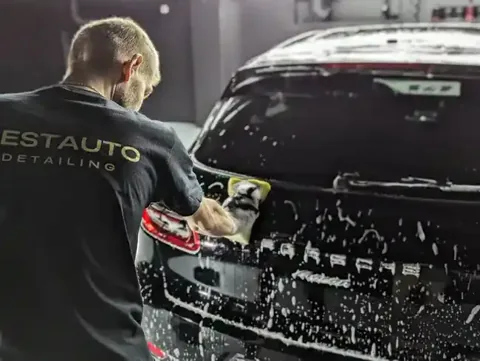
A standard pre-handover interior cleaning covers:
- Floor mat removal and washing (carpet and rubber).
- Vacuum across all fabric (seats, headliner, carpet, sills).
- Deep wash via extractor (chemistry under pressure + dirt extraction).
- Leather and plastic cleaning with professional automotive chemistry.
- Dashboard, screen, steering wheel and switch cleaning.
- Disinfection and odour neutralisation (essential after taxi or rental use).
- Ozone treatment 30–60 minutes (optional, finishes off the smells).
The studio runs German automotive chemistry from Koch Chemie (premium pH-neutral formulas), professional extractors, a 150 °C steam generator for deep cleaning and disinfection. Result — interior near factory condition in 4–6 hours of work.
Special case: a car after taxi or Bolt/Yandex use. Interior load is 5–10x higher than private use. Needs medium-or-heavy cleaning (from 500 ₾) plus mandatory ozone (from 50 ₾). Without ozone, sweat and passenger fragrance smells stay even after perfect mechanical cleaning.
What usually pays back: body polishing
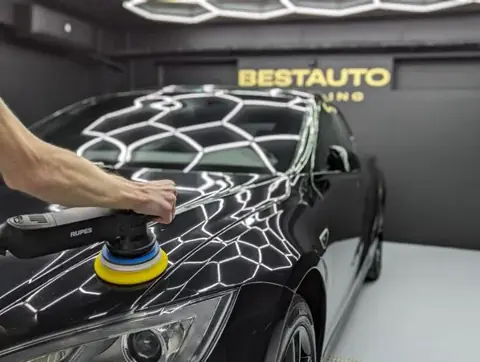
Car polishing from 690 ₾ — the second item that pays back more often than not. Georgian lessors rate "paint condition" subjectively (1–5 score or "good/medium/bad"), and the rating drives the deduction from the residual value. The gap between "medium" and "good" is usually meaningfully above the polishing fee itself. Polishing moves "medium" to "good" in most cases.
What polishing does before handover:
- Removes holograms and swirl webs from car washes accumulated over the lease term.
- Takes out shallow scratches (under 0.3 mm) — the ones that are not "scratches" by the fee book but visually drag the perception down.
- Restores colour depth (especially on dark cars — black, blue, dark grey).
- Preps the surface for the next owner (if the lessor plans a resale).
When polishing is NOT needed. If the body has deep damage — chips with metal exposure, long scratches past the clearcoat, parking dents. Polishing will not fix those (that is body shop work) and the combined polishing + repair total goes above each fee taken individually. In those cases it is more rational to accept the fee and not spend.
Full polishing service line (headlights, interior trim, glass) on the polishing page. Before booking — a free LED-lamp inspection to check whether the procedure makes sense for your specific paint condition.
What pays back situationally: film and decor removal
The third common task — vinyl, sticker, anti-chrome film, PPF, advertising vinyl removal (if the car was used as a rolling billboard). Pay-back depends on two things: what the lease contract says about original kit, and how many years the film has been on the car.
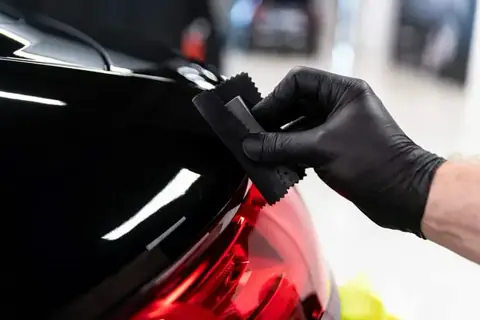
Anti-chrome (black film over chrome trim). Removable in an hour and a half, comes off relatively easily. Work cost is priced per element count at inspection. If the contract requires "return in original kit", removal is mandatory — the lessor will not accept a car with black anti-chrome that left the showroom with chrome. Always pays back.
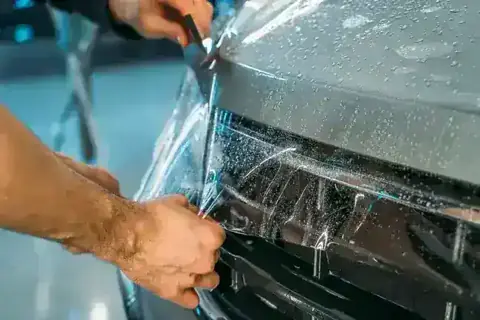
PPF protective film. If the car wears PPF and the warranty is still active — usually leave it on, the lessor sees a well-maintained car with extra protection (which raises residual value). Remove only if the film has yellowed at the edges or visibly degraded. Removal is a separate procedure, from 600 ₾ for the front group, exact figure at inspection.
Full vinyl colour change. If the car was wrapped and the contract demands the original colour — removal is mandatory. Removing vinyl from a large area takes 4–8 hours, price set at the in-person inspection after assessing the film and the paint underneath. Vinyl that has spent over 3 years on the car can leave glue residue requiring extra processing.
Advertising on the doors (Bolt/Yandex branded taxi use). Off in an hour, usually free or at a symbolic charge for the whole car.
Window tint. If the contract specifies "return without tint" — we remove it (low cost, exact price at inspection). If the contract is silent — tint usually stays; in Georgia it is legal and not treated as a defect.
What NOT to do before handover
A few procedures that are not worth the spend before handover — fee is cheaper.
Body shop repair of deep chips and scratches. Pricing varies by body shop in Tbilisi — check directly. Acceptance fee per chip usually falls within the low hundreds of lari. Worth doing only if all damage combined costs more than the combined fee, which is rare.
Replacing slightly worn tyres. Contract tread minimum is usually 4 mm. At 4.5 mm — no replacement needed. At 3.5 mm — the per-wheel contract fee is typically well below the price of a new tyre. Pay the fee.
New mats to replace worn ones. Lessors usually do not charge for worn mats — they fall under wear. If the contract specifies mat replacement — the set price and the contract fee usually sit in the same range. Not critical.
Full engine bay detailing. A clean engine looks nice but rarely matters at acceptance (with the exception of premium-segment leases). Standard engine wash is 80 ₾, but if there are no other issues it will not move the score.
Restoring cracked leather seats. Professional leather restoration (recolour + lamination) — from 500 ₾ per seat. The "worn driver's leather" fee in the contract is usually below that figure. Cheaper to take the fee.
The logic is simple: read your contract, count fees per item, compare with prep costs. Spend only on what gives a real net positive. "Bring the car to perfect at my expense before return" is an emotion, not economics.
Time and money for a sane prep
A realistic prep plan for the week before handover on a basic private-use lease (no advertising, no wrap, no major damage):
Week −7. Self-assessment. Pull out the contract, find the acceptance section, re-read the fee items. Walk around the car outside, mark all damage. Look inside, evaluate seats, headliner, carpets. Build the do/skip list.
Week −5. Studio booking. Call the detailing centre, describe the condition, pick dates for cleaning and polishing. In peak season (year-end lease return wave) book 2–3 weeks ahead.
Week −3. Film/decor removal. If required by contract — anti-chrome, advertising, vinyl off. Separate visit, 2–4 hours.
Week −2. Interior cleaning. 4–6 hours in the studio. Then 1–2 days of drying in the climate cell, drive home next day.
Week −1. Body polishing. 4–8 hours in the studio. Then ready for handover.
Handover day. Light wash outside (2-phase — 40 ₾ sedan, 45 ₾ SUV), tidy interior (no extra cleaning, just dust). Documents, keys, kit — in order.
Indicative budget for an average case:
- Medium interior cleaning — from 500 ₾
- Ozone (post-taxi or smoker household) — from 50 ₾
- Body polishing — from 690 ₾
- Anti-chrome removal (if applicable) — from 300 ₾
- Final wash — 40–45 ₾
Total — from 1580 ₾ for a "private lease, no major issues" scenario (sedan; from 1585 ₾ for an SUV).
That is close to the average "improper condition" fee in a standard lease contract. Prep usually breaks even on money but leaves the car looking better, the lessor more lenient and the small-item fee risk lower.
If the contract had a "buyout at residual value" option, the maths shifts. A well-prepped car has a higher market price on subsequent resale. In that case it is also worth thinking about PPF — physical chip protection in the years after buyout that preserves resale appearance later.
FAQ
How do I know what fee I'll be charged for a specific damage?
Pull out the lease contract and find the "Return tariffs" or "Damage fees" appendix. It either lists fixed amounts by damage type (200 ₾ for a hood chip, 150 ₾ for a 10 cm scratch), or says "at actual restoration cost at a partner service". The second case means the figure cannot be known in advance — you have to compare blind. If you do not have the contract — request a copy from the lessor; they are obliged to provide it.
Can I agree with the lessor to take the car "as-is" without prep?
In most cases — no, the formal acceptance procedure runs without exceptions. But some companies offer a "pre-pay the fees" option at a fixed price (usually tied to the average "improper condition" fee listed in your contract). That clears all detailing claims. Ask your account manager before starting prep — sometimes it is cheaper than spending on cleaning and polishing.
How much does pre-handover interior cleaning cost and what is included?
Light from 400 ₾, medium from 500 ₾, heavy (post-taxi, smoker, pets) from 550 ₾. Ozone (smell neutralisation) from 50 ₾. Standard cleaning: mat removal and washing, vacuum, fabric extraction, plastic and leather cleaning, disinfection, smell neutralisation. 4–6 hours in studio plus 1–2 days drying. Full pricing on interior cleaning.
Is PPF worth doing before returning a leased car?
If you are returning and not buying out — no, PPF spend will not pay back at acceptance. If you are buying the car out at residual and keeping it — yes, PPF is a physical barrier against gravel chips for the next years. Especially worth it on hood, bumper, headlights — the most exposed zones. From 2500 ₾ for the front group.
What about expensive existing film — leave on or remove?
If the film is in good condition — leave on. Extra protection is rated positively (or neutrally, depending on contract) at acceptance, never as a fee. Remove only if the film has yellowed, lifted at edges, or visibly degraded enough to drag the overall impression down. In that case it is better to remove and hand over "without it" than to hand over with bad-shape film.
Conclusion
A lease or long-term rental return is arithmetic, not aesthetics. Each prep line is compared to the lessor's fee. Interior cleaning at 400–550 ₾ almost always pays back (the contract fee for a dirty interior is usually meaningfully higher). Body polishing at 690 ₾ pays back often (raises the paint score). Film and decor removal pays back always when the contract demands original kit.
What to skip — body shop repair of small chips (fee is cheaper), replacing slightly worn tyres (fee is cheaper), full leather restoration (fee is cheaper). The logic: if you are returning a car you will not keep, spend only on items below their fee. If you are buying out and keeping it, add procedures that raise resale value and think about protection for the years ahead.
Final note: pull out the contract, read the fee section, count each item separately. "Bring the car to perfect before handover" is emotionally appealing, but economically it usually loses to a target-driven per-line approach.
Key takeaways:
- Acceptance check covers body, wheels, interior, documents and standard kit.
- Interior cleaning (from 400 ₾) almost always pays back — interior fees are usually higher.
- Polishing (from 690 ₾) often pays back — moves the paint condition score up.
- Vinyl/anti-chrome/advertising removal is mandatory if the contract demands it.
- Does NOT pay back: small chip body work, slightly worn tyres, leather restoration.
- If the car will be bought out and kept — add PPF and extended polishing.
Book a lease or long-term rental return prep at BESTAUTO via the form on the service page or by phone to whichever studio is more convenient in Tbilisi, Georgia:
- BESTAUTO Guramishvili — Guramishvili Ave. 78, tel. +995 550 000 299
- BESTAUTO Politkovskaya — Anna Politkovskaya St. 51, tel. +995 550 000 199
Both studios are open Monday to Saturday, 10:00–20:00. Before any work — a free interior and body inspection, condition assessment, and an honest recommendation: what to do that pays back, and what to skip because the fee is cheaper. At booking it is easier to coordinate "cleaning + polishing + film removal" in one block so the car is ready in a single visit window.