Headlight Polishing for Your Car: Importance and Methods of Restoration

Learn more about modern headlight polishing methods, the reasons behind they’re getting dark, and the benefits you'll gain after polishing

The condition of your headlights affects much more than appearance. It also influences night visibility, comfort in rain, and overall safety. When headlights become cloudy, yellowed, or covered with fine scratches, light no longer passes through them the way it should. The beam scatters more, the road is lit worse, and the car itself starts to look older and less cared for. That is why headlight polishing is not just a cosmetic service — it is a practical procedure that can noticeably improve daily driving.

In Tbilisi, this problem is especially common on cars that spend a lot of time parked outdoors, drive on dusty roads, or are washed with harsh chemicals. Sunlight, sand, road grime, poor washing habits, and simple age gradually damage the outer layer of the headlight. It often starts with light haze, then develops into yellowing, micro-scratches, and sometimes deeper defects. At that point, many owners think they need new headlights, while in reality professional polishing is often more than enough.

car polishing is a controlled restoration of the outer surface. A specialist removes the damaged external layer step by step, levels the surface, and restores transparency. But one important detail matters here: polishing alone is not the final answer. If restored headlights are left unprotected, sun, chemicals, and abrasion will quickly start aging the surface again. That is why the best strategy is not just polishing, but polishing followed by protection — ideally with protective film.

When Headlight Polishing Is Truly Needed

There are several clear signs that headlights already need restoration:

  • the lens looks cloudy and has lost transparency;
  • fine scratches are visible on the surface;
  • the plastic has yellowed or become dull;
  • nighttime visibility has clearly worsened;
  • the road looks harder to see in darkness or rain;
  • the vehicle looks older and less cared for overall.

Sometimes the owner assumes the issue is the bulb, while in reality the main restriction is the headlight surface itself. If the outer layer is hazy, even a good bulb cannot work to its full potential. That is why polishing is often the correct first step before buying more expensive replacement parts.

Why Headlights Become Cloudy Over Time

Most modern headlights are made from polycarbonate. This material is light, durable, and allows complex shapes, but it has one weak point: the surface is sensitive to UV, abrasion, and chemical exposure.

The most common reasons are:

1. Ultraviolet Exposure

The sun gradually destroys the upper protective layer. As a result, the headlight loses transparency, takes on a yellowish or gray tint, and scatters light more strongly.

2. Sand and Dust

Especially in city use and on highways, headlights are constantly hit by fine abrasive particles. These create micro-scratches that are visible even in daylight.

3. Improper Washing

Hard sponges, poor-quality chemicals, automatic washes, and aggressive cleaners accelerate surface wear.

4. Road Chemicals and the Environment

Salt, moisture, dirt, and exhaust residue gradually create stubborn contamination and lower transparency.

5. Age

If headlights have not been restored for years and were never protected, accumulated damage gradually becomes a systematic problem.

What Professional Polishing Gives You

The main result of proper polishing is restored transparency. But in practice, the benefit is much broader.

Better Illumination of the Road

When the surface is clean and even, the light scatters less. That means clearer and more stable lighting at night and in bad weather.

Improved Safety

The driver sees road signs, pedestrians, potholes, and obstacles more clearly. This matters especially outside the city and on poorly lit streets.

A Fresher Appearance

Headlights are part of the car’s “face.” Their transparency has a strong impact on how the whole vehicle is perceived. After polishing, the car usually looks noticeably fresher and better cared for.

A More Cost-Effective Choice Than Replacement

In many cases, buying new headlights costs far more than professional restoration. If the housing is not cracked and the main issue is surface damage, polishing is often the smarter financial choice.

When Polishing Is No Longer Enough

It is important to be realistic. Not every headlight can be brought back with polishing alone. The procedure works best when the problem is in the outer layer. But if the damage is deeper, additional work or full replacement may be required.

Polishing is often no longer enough if:

  • the headlight is cloudy from the inside;
  • the housing is cracked;
  • the plastic has deeply degraded;
  • the mounting points are damaged;
  • moisture gets inside;
  • the reflective element has already deteriorated.

That is why the correct approach always starts with inspection. A good studio first evaluates the type of damage and then honestly explains what result is realistic and how long it is likely to last.

How Headlight Polishing Is Performed

A high-quality result depends not on a single compound, but on the full process. Usually the work goes through several stages.

1. Inspection and Assessment

The technician first checks whether the problem is external. If the damage is inside the unit, this usually becomes obvious right away.

2. Cleaning and Preparation

The headlight is cleaned thoroughly, and adjacent body panels are masked off so nearby surfaces are not damaged during the process.

3. Abrasive Restoration

The specialist gradually refines the surface using the correct abrasives. The goal is to remove the oxidized, damaged outer layer in a controlled way and level the lens.

4. Finishing Polish

The final clarity and gloss are restored using finishing compounds and the right pads.

5. Protection

This stage largely determines how long the result will last. A restored headlight should always be protected. There are different options, but in practice one of the strongest solutions is protective film.

Why You Should Not Stop at Polishing Alone

This is one of the biggest mistakes owners make. After polishing, the headlight looks clear and fresh, but if it is left unprotected, UV, weather, and abrasion will quickly start damaging it again. That is why many low-cost “quick polishes” look good for a short time and then turn cloudy again a few months later.

If you want a more stable result, follow-up protection is essential. This is where polishing turns into a smarter long-term strategy — restoration plus preservation. This is especially important for cars that are driven every day, parked in the sun, or washed frequently.

The Best Way to Protect Headlights After Polishing

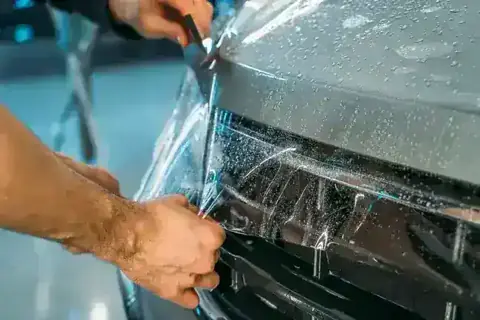
After polishing, there are several ways to preserve the result: dedicated coatings, lacquer, or protective film. In practice, ppf wrap is often one of the most interesting solutions because it protects not only from UV, but also from everyday mechanical wear.

Main benefits of protective film include:

  • reduced risk of new micro-scratches;
  • protection against sand and fine abrasion;
  • slower repeat hazing from ultraviolet exposure;
  • longer-lasting transparency;
  • a longer interval before restoration is needed again.

In other words, polishing restores the headlight, while protective film helps the result last much longer. That is why the same conclusion appears again and again in this topic: the best outcome comes when restoration is combined with protection.

How Long the Result Lasts

There is no single universal number here. The longevity of the result depends on several factors at once:

  • how heavily the headlight was damaged before restoration;
  • how correctly the procedure was performed;
  • whether protection was added afterward;
  • where and how the car is used;
  • how carefully the headlights are maintained later.

If the headlights are simply polished and left unprotected, the effect may weaken relatively quickly. If protection is added afterward — especially quality protective film — clarity generally lasts much longer. That is why when the question is “how do I make the result last,” the answer is almost always the same: protection.

Headlight Care After Polishing

After the procedure, it is best to follow a few simple rules:

  1. do not use hard sponges or stiff brushes;
  2. avoid aggressive chemicals;
  3. wash the headlights regularly with gentle products;
  4. do not rub the surface when it is dry;
  5. if protective film has been applied, follow the recommended care instructions.

These simple habits directly affect how long the headlights stay clear, transparent, and visually clean.

Pricing in Tbilisi: What Matters

On the current BESTAUTO pricing page, headlight polishing starts from 150 GEL, while protective film for a headlight starts from 350 GEL. That clearly shows that visual restoration and preserving the result are two different tasks, which is why they have different prices. If your goal is the longest-lasting effect, it often makes more sense to consider not only polishing, but also adding protective film right away.

The final price can depend on the condition and size of the headlight, the degree of damage, and whether you need only restoration or restoration plus protection. So the more useful question is not just “how much is polishing,” but “what result do I want, and how long do I want it to last?”

When It Is Better to See a Specialist Right Away

Do not postpone a visit if:

  • you already see the road much worse at night;
  • the headlight has become heavily yellowed;
  • there are many scratches on the surface;
  • the front of the car is regularly exposed to a lot of dust and sand;
  • you plan to sell the car and want to improve its appearance;
  • you want not only polishing, but a longer-lasting protected result.

The earlier restoration begins, the higher the chance of bringing the headlight back properly without unnecessary extra cost.

Polishing or New Headlights?

It depends on the type of damage. If the issue is surface-level, polishing is almost always the more rational choice. If the damage is inside, the housing is cracked, or the reflective element is already deteriorated, replacement may be the better option. But in real practice, many cases are solved successfully with professional restoration.

What matters here is honest assessment. A good studio does not promise the impossible — it explains what can still be corrected, what cannot, and where the sensible line between restoration and replacement lies.

Why This Service Is Especially Relevant in Tbilisi

Sunlight in Tbilisi, dust, frequent city driving, and open-air parking all affect headlight condition quite quickly. Add regular washing and, in some cases, poor maintenance, and cloudy headlights become a very common issue. If the car is driven every day, headlight clarity will almost inevitably require attention at some point.

That is why headlight polishing should not be treated as a random cosmetic service. It combines safety, appearance, and practicality. And if the goal is not a short-lived visual effect but a more durable result, protection becomes the logical next step.

Conclusion

Headlight polishing is needed when the surface has turned cloudy, yellow, scratched, and that already affects both light output and the car’s appearance. Properly performed restoration brings back transparency, improves visibility, and in many cases is far more reasonable than immediately buying new headlights.

But the main conclusion is simple: polishing gives the best result when it does not end with “polish and forget.” If you want the effect to last, the headlights need protection. That is why in a practical, long-term approach, polishing is often only the first stage, and real preservation begins where protective film is added.

If your headlights have already lost transparency, it is better not to wait. Timely restoration almost always gives the better result, and properly selected protection makes that result much more stable.

Order professional headlight polishing

Our detailing studio gets things done to a good quality
Real reviews from our clients
Google Reviews
4.8 ★★★★★ (185)
View all reviews on Google
Why Choose Our Detailing Center?
You'll love the result
  • 5 Years of Detailing Experience
    Professional wrapping of hundreds of cars of different makes and models
  • 2 Studios in Tbilisi
    Guramishvili 78 and Anna Politkovskaya 51 — choose a convenient location
  • 2,000 Satisfied Clients
    Hundreds of reviews, 4.9★ rating on Google
  • 10-Year Film Warranty
    We cover peeling, yellowing, and material defects

Order professional polishing

Our detailing studio will handle your task with quality

Book a consultation

Choose the nearest studio
for a free consultation

Free inspection, pre-consultation and booking for main services available at both locations

BESTAUTO Guramishvili
Tbilisi, Guramishvili Ave. 78
BESTAUTO Guramishvili

Tbilisi, Guramishvili Ave. 78

+995 550 000 299
Mon–Sat 10:00 – 20:00
Enter phone in international format: +995 5XX XXX XXX
Request sent!
We will call you back within 15 minutes.
Or call us: +995 550 000 299
BESTAUTO Saburtalo
Tbilisi, Anna Politkovskaya St. 51
BESTAUTO Saburtalo

Tbilisi, Anna Politkovskaya St. 51

+995 550 000 199
Mon–Sat 10:00 – 20:00
Enter phone in international format: +995 5XX XXX XXX
Request sent!
We will call you back within 15 minutes.
Or call us: +995 550 000 199
Chat on WhatsApp
Choose your studio
Guramishvili Studio
78 Guramishvili St
Saburtalo Studio
51 Anna Politkovskaya St
Book a Free Inspection