Pre-sale polishing — a small spend that moves first impressions

How polishing affects a private buyer's first impression, what it does for listing photos, and the gap between an average and a mirror-finish body on inspection.

Pre-sale polishing at 690 ₾ and up is the most under-rated investment in getting a car ready to sell. Spend that money a few days before showing the car, and the seller gains several things at once: better listing photos, less haggling on inspection, a shorter exposure on listing platforms. In Tbilisi, where about 70% of private sales start with photos on myauto.ge and where a buyer scrolls past 200 listings an hour, the body's appearance is the primary filter. Below: how pre-sale polishing actually affects the result, when to do it, and what not to do to avoid hurting the deal.

Why body appearance matters more than mileage at sale time

On the Tbilisi used-car market a buyer decides "look or skip" in 3-5 seconds on a listing photo. Specs come later, once the car has made the shortlist. Getting on that shortlist is the seller's main job, and appearance does it.

Two identical cars — same year, mileage, colour — at equal price the buyer picks the shining one, not the matte one. At different prices buyers pay more for the car with "better eyes" — subconsciously, well-kept exterior reads as well-kept interior. Tested behaviour, not marketing theory.

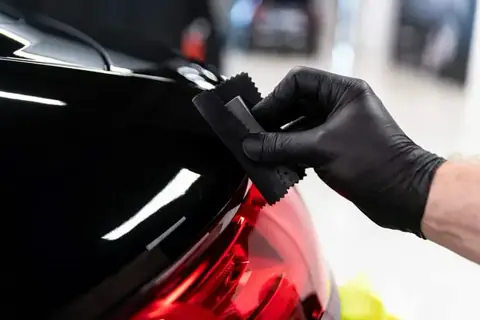
Body polishing removes the defects that lower first impressions: swirl-mark web, dulled clearcoat, sun stains, small bumper rubs. After studio polishing the car reads not as "generally well-kept" but as "almost new" — visible even in smartphone photos.

The economic impact — what the seller gets

Pre-sale polishing delivers a meaningful premium on resale — the amount depends on model, year, market, and starting condition. The mechanism is the same across segments: a cared-for car sells faster and with fewer concessions.

Studio polishing pays back through three channels. First — holding the asking price: a buyer inspecting a mirror-finish body has fewer haggling arguments. Second — speed of sale: good photos mean more views in week one, more call-backs, shorter exposure. Third — positioning: the car reads as "single owner, rare brush-wash" and competes in a higher band.

The classic seller mistake is listing as-is with swirl-mark web and a matte hood, then cutting the price two weeks later because no one calls. A 690-lari polish up front removes that need.

What a buyer sees on inspection

Buyers may not know technical terms but their eyes are trained. On inspection a private buyer opens the door, walks around, looks along the body at an angle for reflections, glances under arches. The first 2 minutes give 80% of the decision.

What a buyer sees on a polished car: even shine across every panel, clean fender tops and pillar edges, deep colour in reflections (especially on dark bodies — black, graphite, dark blue).

On an unpolished car of the same age: swirl-mark web on the hood, matte spots on fenders, water-drop streaks on the roof, small scratches on door handles. Each one the buyer mentally prices as "a bit more to tidy up", and those adjustments add up.

That sum becomes the discount the seller will or won't give. Polishing cancels that discussion in advance.

When to polish — the timing window

A pre-sale polish has to happen in the right window, or the money is wasted — or worse, the work hurts the deal.

The sweet spot is 3-7 days before the first showing or photo session. In that window the clearcoat fully stabilises after abrasive, the fresh shine settles, the studio dust clears. You can photograph the car immediately after polishing, but an experienced eye will see slight "wetness" in the clearcoat — it fades in 3-5 days and a clean effect remains.

What not to do: polish more than a week before the sale if the car keeps being driven around town. The swirl-mark web reappears in a week of active use, and by the time of showing the effect is weaker. The rule: polishing is the last procedure before the listing, and after it only a gentle hand wash, no brushes.

Also don't polish a panel that was repainted yesterday. Clearcoat cures for 30 days minimum after paint, polishing before that timeline strips the uncured layer and creates matte patches. If the car has recently repainted panels — either polish 30-45 days after paint, or skip those panels and do only the originals.

What goes into a pre-sale polishing procedure

A pre-sale polish at the studio is typically on a compressed programme: maximum visual impact in standard time.

Two-phase wash with degreaser — removes dust, salt, organics so the abrasive cuts evenly. Clay bar over every horizontal surface — lifts tar spots and brake-dust iron particles. Gauge reading — baseline check of clearcoat thickness per panel so 2-5 microns can be removed safely. Two-step abrasive polish — coarse compound levels scratches, finishing compound brings back depth. Inspection under a control lamp — directional light exposes any residual holograms. Alcohol-based degrease — preps the surface for any protective layer if planned.

Mid-size sedan — 6-8 hours. The result holds 3-6 months without top protection, well beyond typical listing exposure (2-8 weeks on platform). The polish outlasts the sale with a buffer.

Pre-sale polishing differs from "polishing for yourself" in one detail: "for yourself" adds a ceramic coating for long-term protection. Before sale, ceramic is usually skipped — its cost (from 500 ₾) no longer recovers as premium, and new owners typically want to choose their own protection.

Pre-sale polishing cost

Studio polishing in Tbilisi is flat-priced by surface type — age or urgency don't change the rate:

  • Body polishing — from 690 ₾
  • Headlight polishing — from 150 ₾
  • Interior element polishing — from 200 ₾
  • Glass polishing — from 250 ₾

The minimum pre-sale kit is body polishing (690 ₾). Add headlight polishing (150 ₾) if the lenses have yellowed. Interior element or glass polishing usually isn't part of the pre-sale pack unless the interior is also being photographed.

The final figure for a specific car is set after in-person inspection. Body size matters: SUV or minivan means more surface and a figure closer to the upper end of each rate versus a compact. Full pricing is on the car polishing service page.

For scale: the body polish cost is about what a seller would otherwise give up on the very first inspection in discounts. Used-car negotiations rarely stay symbolic — the numbers stack quickly if the buyer finds reasons.

What not to do before selling

A few mistakes that hurt the deal.

Supermarket cream polish the day before showing. Cream goes on unevenly over large areas, and an experienced buyer tilting their head catches the "greasy" shine — a signal the body is masked, not tidy. Between a studio and a cream before sale, studio wins.

DIY machine polishing with no experience. DIY holograms are an obvious "rushed freshen-up" sign. The buyer marks a minus. Self-polishing at sale time produces the opposite effect.

Repainting a panel right before sale. Fresh paint always looks different from neighbouring panels in gloss and texture — the first thing resellers check. If a panel needs paint, either leave it as-is and discount, or paint 2-3 months ahead.

Vinyl wrap over body defects. Chips and stains stay under the film; a buyer lifting a corner finds a surprise. A severe trust hit on inspection.

Polishing plus what else — the full pre-sale pack

Beyond body polishing, a few procedures visibly lift a car's look before sale.

Headlight polishing — if the lenses are yellow or hazy, it's the first thing visible in front-end photos. For 150 ₾ the headlights clear up and the car visually ages down. On an older car the effect is especially strong — clean headlights on a 10-year-old vehicle create an age-versus-care contrast in the seller's favour.

Interior chemical cleaning — not polishing, but part of the same pre-sale prep. Clean seats and dash on inspection count equally with a clean body: the buyer opens the door and forms a second decision about the car.

Ceramic coating before sale is debatable. The cost (from 500 ₾) adds to the budget, the effect isn't obvious to the buyer (the car already shines after polishing), and the useful life exceeds the sale timeline. Ceramic makes sense only if the sale is deferred 3-6 months and the car keeps being driven — then it holds the polishing shine.

What's next — protection for the new owner after sale

One scenario worth mentioning: some sellers do polish + ceramic and hand the car over to the new owner as "fully protected". That adds to positioning and sometimes allows a higher asking price to hold.

The maximum option is handover with polish, ceramic, and partial PPF on the front group. PPF paint protection film (from 2500 ₾ for the base pack) is a serious investment, but it physically protects the body from chips for years. On premium cars such a pack before sale can become a marketing angle: "handed over protected, no immediate body-protection spend required".

For mass-segment cars a full pack with PPF typically doesn't return the investment on resale — it's simpler to sell with basic polishing and let the new owner decide on their own protection.

FAQ

How much of a price difference does polishing make at sale?

Depends on model, age, region, and starting condition. In practice polishing delivers a meaningful premium and shortens time-on-market. The mechanism is holding the asking price without haggling and speeding up the sale. Pays back at the first-inspection stage.

How many days before the sale should the polish happen?

3-7 days before the first showing or photo session. Earlier — the car picks up new scratches. Later — clearcoat may not have stabilised after abrasive, with slight "wetness" in photos. A week is the sweet spot.

Will polishing help if the body has deep chips?

Partially. If a chip broke through to primer, abrasive won't restore it. But overall impression improves — a chip on a shining body reads as "a local issue". Sellers often combine whole-body polish with local touch-up on chips.

Is polishing worth it on a 5-year-old car with no visible defects?

Yes, if dark. On black, graphite, and dark blue, micro-scratches show even on young cars. Polish adds a new-car feel in photos. On light colours the effect is less pronounced but still positive.

What if the car sits outside for a week after polishing before showing?

Nothing catastrophic. A week in Tbilisi adds some dust, a few small spots, maybe rain streaks. Recommended: garage until showing; otherwise fabric dust cover (not polyethylene — scratches). Before showing, microfibre wipe, no wash.

Conclusion

Pre-sale polishing is one of the most profitable pre-sale procedures. For 690 ₾ the seller gets better listing photos, less haggling on inspection, shorter platform exposure, and confirmation of the general "cared-for car" impression. The mechanism works on any model and any age: a well-kept exterior sells faster and with fewer concessions.

Timing matters (3-7 days before first showing), the right procedure choice (studio polishing, not a supermarket cream), and honesty about defects polishing doesn't fix (deep chips, repainted panels). With those rules observed, the procedure pays for itself many times over — often before the first test drive.

Key takeaways:

  • Pre-sale polishing delivers a meaningful premium and shortens market exposure
  • Optimal timing is 3-7 days before the first showing or photo session
  • Body polishing at 690 ₾ typically pays back by eliminating first-inspection haggling
  • DIY polishing and supermarket cream before sale are more likely to hurt than help
  • Don't polish recently repainted panels until 30-45 days after paint

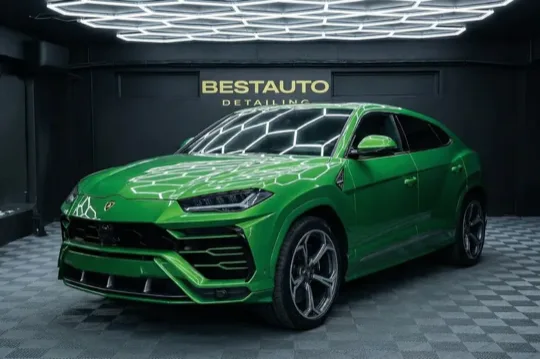
Pre-sale car polishing at BESTAUTO — standard two-step body polishing pack, 6-8 hours of work, ready for photos and showings:

  • BESTAUTO Guramishvili — Guramishvili Ave. 78, tel. +995 550 000 299
  • BESTAUTO Politkovskaya — Anna Politkovskaya St. 51, tel. +995 550 000 199

Book by phone or via the form on the service page. Both studios are open Monday to Saturday, 10:00–20:00. A free in-person inspection with a gauge comes first — the technician will tell you which polishing programme fits your specific body and what result is realistic for the photo session.

Google Reviews
4.8 ★★★★★ (195)
View all reviews on Google
Why Choose Our Detailing Center?
You'll love the result
  • 5 Years of Detailing Experience
    Professional wrapping of hundreds of cars of different makes and models
  • 2 Studios in Tbilisi
    Guramishvili 78 and Anna Politkovskaya 51 — choose a convenient location
  • 2,000 Satisfied Clients
    Hundreds of reviews, 4.9★ rating on Google
  • 10-Year Film Warranty
    We cover peeling, yellowing, and material defects

Order professional polishing

Our detailing studio will handle your task with quality

Book a consultation

Choose the nearest studio
for a free consultation

Free inspection, pre-consultation and booking for main services available at both locations

BESTAUTO Guramishvili
Tbilisi, Guramishvili Ave. 78
BESTAUTO Guramishvili

Tbilisi, Guramishvili Ave. 78

+995 550 000 299
Mon–Sat 10:00 – 20:00
Enter phone in international format: +995 5XX XXX XXX
Request sent!
We will call you back within 15 minutes.
Or call us: +995 550 000 299
BESTAUTO Saburtalo
Tbilisi, Anna Politkovskaya St. 51
BESTAUTO Saburtalo

Tbilisi, Anna Politkovskaya St. 51

+995 550 000 199
Mon–Sat 10:00 – 20:00
Enter phone in international format: +995 5XX XXX XXX
Request sent!
We will call you back within 15 minutes.
Or call us: +995 550 000 199
Chat on WhatsApp
Choose your studio
Guramishvili Studio
78 Guramishvili St
Saburtalo Studio
51 Anna Politkovskaya St
Book a Free Inspection